Specification
Purity>99% (HPLC + MS)
FormLyophilised powder
Supplied asSingle sealed vial
Storage-20 °C, dark, sealed
Reconstituted2–8 °C
Certificate of analysis
Scan the QR code on your vial, or type the batch number, and you get the analytical data for the exact vial you received.
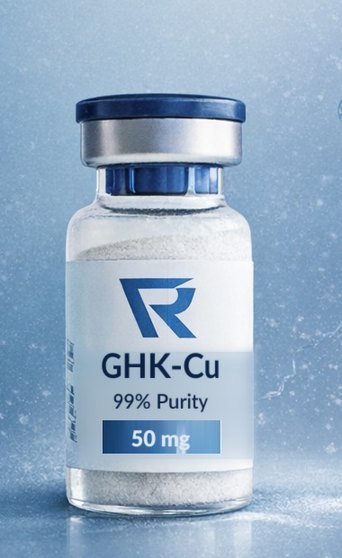
Verify your vial →GHK-Cu (Copper Peptide)
Copper tripeptide-1, glycyl-L-histidyl-L-lysine:Cu(II)
A naturally occurring copper-binding tripeptide whose plasma concentration falls sharply with age; the best-characterised peptide in dermal remodelling literature.
Research use only. This compound is supplied for laboratory research. It is not a medicine or supplement, is not approved for human use, and no dosing guidance for humans is offered here or by our team. Handle under appropriate laboratory conditions. Full disclaimer →
What the literature describes
GHK is present in human plasma, saliva and urine, declining from roughly 200 ng/mL at age 20 to about 80 ng/mL by age 60. Complexed with copper(II) it has been studied for four decades. Reported effects include stimulation of collagen synthesis by fibroblasts with activity beginning between 10⁻¹² and 10⁻¹¹ M, modulation of both matrix metalloproteinases and their tissue inhibitors, stimulation of decorin and glycosaminoglycans, and restoration of replicative capacity in irradiated fibroblasts. Gene-expression analyses have reported GHK resetting large numbers of genes toward a healthier state.
Available sizes & pricing
Price is per single sealed vial, in USD. Buying several — volume pricing.
| Vial strength | Price | |
|---|---|---|
| 50mg | $63.28 | Order 50mg |
| 100mg | $68.88 | Order 100mg |
Published research
Links open peer-reviewed sources on PubMed. These are provided so you can read the primary literature yourself. Citing a study is not a claim that this compound is safe or effective for any use in humans.
- GHK peptide as a natural modulator of multiple cellular pathways in skin regenerationPubMed
- Stimulation of collagen synthesis in fibroblast cultures by the tripeptide-copper complex GHK-Cuu00b2u207aPubMed
- The human tri-peptide GHK and tissue remodelingPubMed
- GHK-Cu stimulates matrix metalloproteinase-2 expression by fibroblast culturesPubMed
- The potential of GHK as an anti-aging peptidePubMed
- All indexed literature on GHK-Cu (PubMed search)PubMed search
Research areas
Studied in the same area
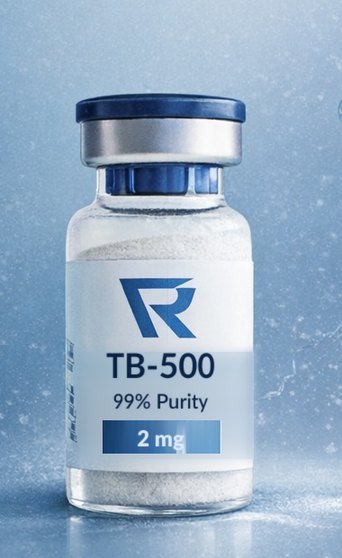
TB-500 (Thymosin Beta-4)
Thymosin β-4 fragment (Ac-SDKP related)
The synthetic analogue of thymosin beta-4, the principal actin-sequestering peptide in eukaryotic cells and a long-studied regulator of tissue repair.
2mg5mg10mg
$43 from, per vial
View